

Table of Contents
Introduction
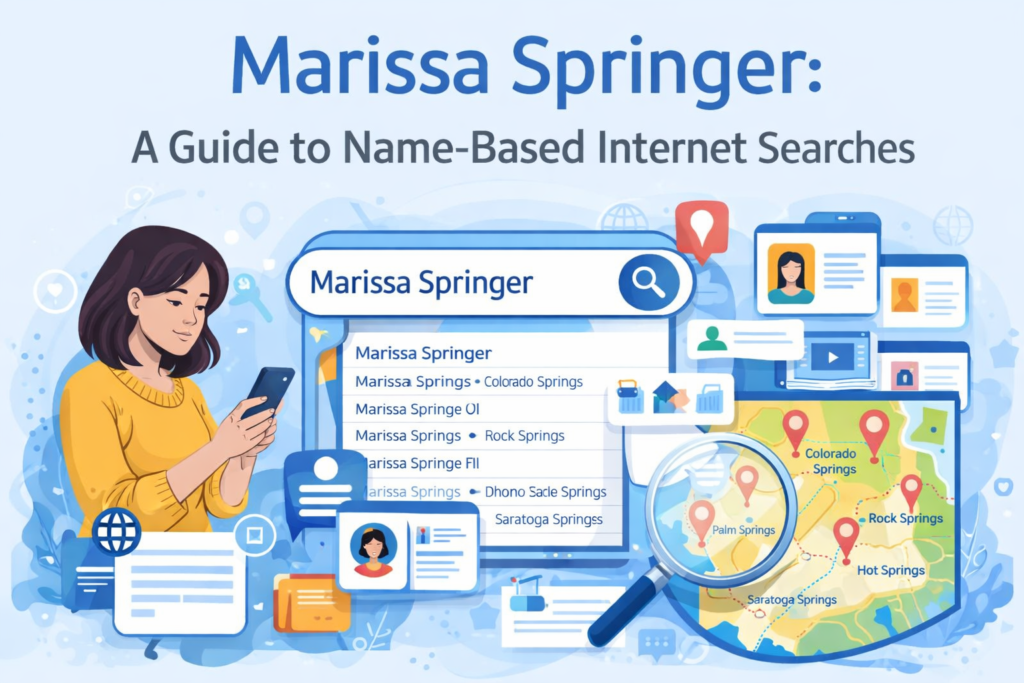
The search term Marissa Springer is frequently entered into search engines by users looking for information related to a name combined with geographic or contextual details. These searches often include variations such as cities, states, or words like Springs, Spring Valley, or Palm Springs. Despite appearing specific, the keyword does not usually refer to a single identifiable individual. Instead, it reflects how modern search engines process names as keyword combinations rather than verified identities.
This article explains how name-based searches work, why results vary, and how users should responsibly understand the information they encounter online. The purpose of this content is informational and educational only.
Understanding Name-Based Search Queries
Name-based search queries occur when users type a personal name into a search engine to locate information, references, or public mentions. These searches may be driven by curiosity, professional needs, academic research, or attempts to locate a public profile. Search engines respond by retrieving any publicly indexed content that matches the keywords entered.
Because names are not unique identifiers, especially common ones, search results can include multiple unrelated individuals. The search engine does not verify who the person is; it only matches text found across indexed web pages.
Why the Name Marissa Springer Appears Frequently Online
The name Marissa is widely used in English-speaking countries, and Springer is a well-established surname. When combined, these two elements create a keyword phrase that appears across many datasets, directories, and online records. Search frequency increases further when users add location-based modifiers or related words such as Springs.
Search engines also associate similar terms together, meaning variations of the name or related geographic words can surface under the same search query. This leads to a broader range of results rather than a single focused profile.
How Search Engines Interpret Names
Search engines rely on algorithms designed to identify relevance, keyword proximity, and user intent. When processing a name like Marissa Springer, the system looks for pages that include those words in titles, content, metadata, or links. It does not confirm personal identity or accuracy.
As a result, the same search may show professional pages, academic references, archived documents, or directory listings that are not connected to each other. This is a normal outcome of keyword-based indexing.
The Role of Location in Name Searches
Users often include geographic terms when searching for a name to narrow down results. Adding a city or state helps the search engine prioritize pages that mention both the name and the location. However, this does not ensure accuracy, as multiple individuals with the same name may exist in different regions.
Location-based results are influenced by keyword relevance rather than verified residence or association. This is why different cities frequently appear in search results for the same name.
Association with Cities Containing “Springs”
Many results related to Marissa Springer include cities with the word Springs in their name. This happens because search engines treat Springer and Springs as closely related terms. Cities such as Colorado Springs, Palm Springs, Hot Springs, and Rock Springs are commonly indexed and frequently searched, which increases their appearance in name-based queries.
This association is algorithmic and does not indicate a personal connection between the name and the location.
Springer as a Surname Versus Springs as a Keyword
Springer is a recognized family name and may appear in professional, academic, or public contexts. Each appearance of the surname should be evaluated independently. On the other hand, Springs is a geographic term that appears in many place names across the United States.
Search engines sometimes group these terms together due to similarity in spelling and search behavior. This can cause overlapping results that appear related but are not connected in reality.
Publicly Indexed Information and Its Limitations
Search engines depend on publicly available and indexable data. This includes websites, directories, archived pages, and educational platforms. Publicly indexed information may not always be current or accurate, as outdated pages can remain visible long after updates occur.
Users should understand that visibility in search results does not guarantee correctness or relevance.
Academic and Educational References
Some search results associated with Marissa Springer originate from academic or educational sources. These references may include study materials, course guides, or academic documents. Such mentions usually reflect academic contribution or citation rather than personal or biographical information.
Academic content is indexed based on authorship or reference, not on personal prominence.
Professional and Career-Oriented Searches
Many users searching for Marissa Springer are attempting to locate a professional profile or career-related information. These searches may relate to business roles, corporate employment, consulting, or public-facing work. Professional references often appear on company websites, industry directories, or professional networking platforms.
These listings are specific to their context and should not be generalized beyond their original purpose.
Why Search Results Can Appear Unrelated
Unrelated or confusing results are common in name-based searches. This occurs because search engines group content based on keywords rather than personal identity. Shared names, similar spellings, and automated indexing can all contribute to irrelevant results appearing.
This does not indicate misinformation but rather the limitations of automated search systems.
Search Intent Behind Marissa Springer Queries
Most searches for Marissa Springer fall under informational intent. Users are typically seeking clarification, background context, or confirmation of a reference they encountered elsewhere. These searches are not usually transactional or commercial in nature.
Informational intent benefits from explanatory content that provides context and reduces confusion.
SEO Perspective on Name-Based Keywords
From an SEO standpoint, Marissa Springer qualifies as a long-tail informational keyword. Long-tail keywords often have lower competition and more specific user intent. They perform best when content focuses on explanation, structure, and clarity rather than speculation.
Search engines favor content that helps users understand why results look the way they do.
Ethical Considerations When Writing About Names
Writing about personal names requires ethical responsibility. Publishers should avoid assumptions, sensitive claims, or invasive details. Content should clarify that multiple individuals may share the same name and that search results do not confirm identity.
Ethical content builds trust and aligns with search engine quality standards.
How Users Can Verify Information Responsibly
Users researching a name should rely on verified platforms, cross-check multiple sources, and review context carefully. Official websites, professional platforms, and recent publications are more reliable than unverified directories or outdated pages.
Verification is essential when dealing with name-based information.
Common Misunderstandings About Name Searches
A common misunderstanding is believing that search engine results represent verified facts about a person. In reality, search engines display indexed content based on keyword relevance. Understanding this distinction helps users avoid incorrect assumptions.
Best Practices for Publishers Targeting Name Searches
Publishers creating content around names should focus on search behavior, user intent, and informational value. Neutral language, contextual explanations, and clear disclaimers improve both credibility and long-term SEO performance.
The Importance of Context in Digital Search
Context plays a crucial role in interpreting search results. Without understanding how search engines index information, users may misinterpret what they see. Contextual content helps bridge the gap between search output and user understanding.
The Future of Name-Based Searches
As search technology evolves, algorithms may improve at understanding context and intent. However, keyword relevance will continue to influence results. Educational and ethical content will remain essential in reducing confusion around name-based searches.
Conclusion
Marissa Springer should be understood as a name-based search term rather than a single identity. The wide range of results associated with this keyword demonstrates how search engines process names, locations, and publicly indexed information. Understanding this process helps users interpret results responsibly and enables publishers to create accurate, high-quality content.
This article is intended solely for informational and educational purposes and does not describe or known profile any specific individual.
Marissa Springer: A Complete Guide to Name-Based Searches, Digital Identity, and Search Engine Results
Part 1: How Name-Based Searches Work and Why Results Appear
Introduction
The keyword Marissa Springer is an example of how modern internet users search for people using names combined with contextual or geographic terms. Although the phrase appears specific, it does not usually point to a single individual. Instead, it represents a broader category of name-based search behavior shaped by search engine algorithms, keyword indexing, and public data availability.
This first part of the guide explains the foundation of name-based searches, why names like Marissa Springer appear frequently online, and how search engines generate results based on relevance rather than identity verification.
What Is a Name-Based Search
A name-based search occurs when a user enters a personal name into a search engine to find information related to that name. These searches may be motivated by professional interest, academic research, business needs, or general curiosity. Unlike product or service searches, name-based searches rely heavily on context and interpretation.
Search engines treat names as text strings rather than unique identifiers. This means that every publicly indexed page containing the same or similar words becomes eligible to appear in search results.
Why Marissa Is a High-Frequency Search Name
Marissa is a commonly used first name in the United States and other English-speaking countries. It appears across multiple generations, professions, and regions. Because of its popularity, the name frequently appears in public records, academic materials, professional profiles, and social references.
When a common first name is paired with any surname, the likelihood of overlapping results increases significantly. This is one of the main reasons why searches for Marissa Springer return such a wide range of information.
Understanding Springer as a Surname
Marissa Springer: A Complete Guide to Name-Based Searches, Digital Identity, and Search Engine Results
Part 3: SEO Strategy, Publisher Best Practices, and the Future of Name-Based Searches
Introduction to Part 3
Part 3 concludes the comprehensive guide by focusing on how name-based searches such as Marissa Springer intersect with search engine optimization, responsible publishing practices, and the evolving future of digital search. This section explains how content creators can approach name-based keywords ethically and effectively, how SEO strategies should be adapted for such queries, and how future search technologies may change the way names are indexed and interpreted online.
Understanding Name-Based Keywords in SEO
From an SEO perspective, name-based keywords are distinct from product, service, or informational topic keywords. A name like Marissa Springer represents a query with uncertain intent, meaning users may be searching for different contexts at different times. Because intent varies, search engines favor content that explains context rather than content that attempts to define or describe a person.
Search engines evaluate name-based content using relevance, clarity, neutrality, and user satisfaction rather than authority alone. This makes structure and intent alignment especially important.
Long-Tail Nature of Name-Based Searches
Name-based keywords typically fall into the long-tail category. Long-tail keywords are more specific, often lower in competition, and driven by targeted curiosity rather than mass demand. Marissa Springer fits this profile because it is specific enough to avoid heavy competition while still attracting consistent informational searches.
Long-tail name keywords perform best when content is educational, well-structured, and context-driven rather than promotional or speculative.
Why Contextual Content Ranks Better Than Speculative Content
Search engines prioritize content that reduces confusion and provides clarity. Speculative content that attempts to assign meaning, identity, or narrative to a name often performs poorly over time because it fails quality guidelines.
Contextual content that explains how and why search results appear, what users are likely looking for, and how to interpret information aligns more closely with search engine quality standards and user expectations.
Importance of Clear Structure for SEO Performance
Clear headings and paragraph-based structure significantly improve SEO performance for name-based searches. Headings help search engines understand topical hierarchy, while concise paragraphs improve readability and engagement.
For queries like Marissa Springer, structured explanations allow users to quickly find answers to their underlying questions, increasing dwell time and reducing bounce rates.
Search Intent Optimization for Name Queries
Optimizing for search intent is critical when targeting name-based keywords. Most name searches fall under informational or navigational intent rather than transactional intent. This means content should focus on explanation, clarification, and guidance.
Pages that attempt to convert or promote unrelated services using name-based traffic often perform poorly and may be viewed as misleading.
Responsible Keyword Usage and Avoiding Over-Optimization
Overusing a personal name within content can appear manipulative to search engines. Responsible keyword usage involves natural placement within headings and paragraphs without repetition for ranking purposes.
Search engines are increasingly sensitive to over-optimization, particularly when names are involved. Balanced usage improves trust and long-term visibility.
Publisher Responsibility and Editorial Standards
Publishers targeting name-based searches must maintain high editorial standards. This includes neutrality, factual framing, and avoidance of personal assumptions. Content should clearly state its informational purpose and avoid presenting opinions as facts.
Editorial responsibility protects credibility and reduces the risk of content removal or deindexing.
Legal and Ethical Risk Awareness
Writing about names carries potential legal and ethical risks if content implies false information or invades privacy. Even when information is publicly indexed, republishing it without context can create harm.
Ethical publishing involves minimizing personal detail, avoiding sensitive topics, and framing content around systems and processes rather than individuals.
The Role of Disclaimers in Name-Based Content
Disclaimers play an important role in clarifying intent. Informational disclaimers help readers understand that the content does not describe a specific individual and is meant to explain search behavior.
Clear disclaimers also signal to search engines that the content aligns with quality and safety guidelines.
Internal Linking Strategy for Name-Based Pages
Name-based pages perform better when integrated into a broader content structure. Internal links to related articles on search behavior, SEO education, or digital identity help search engines understand topical relevance.
Internal linking also improves user navigation and increases time spent on site, both of which are positive ranking signals.
External Authority Signals and Trust
While external backlinks are less critical for low-competition name-based keywords, links from reputable educational or informational sources can strengthen credibility. Trust signals such as clear authorship, updated content, and transparent purpose also improve performance.
Search engines increasingly evaluate trustworthiness alongside relevance.
How AI and Machine Learning Are Changing Name Searches
Artificial intelligence is gradually improving how search engines understand context and intent. Machine learning models analyze user behavior patterns to better predict what a user means when searching a name.
While AI may reduce irrelevant results over time, keyword-based indexing will remain a core component of search for the foreseeable future.
Entity Recognition and Its Limitations
Search engines are developing entity recognition systems to distinguish between people, places, and organizations. However, entity recognition is not perfect, especially for common names.
Until entity resolution becomes more precise, name-based searches will continue to produce overlapping and ambiguous results.
Future Trends in Name-Based Search Results
In the future, name-based searches may rely more heavily on contextual signals such as occupation, platform association, or verified profiles. Search engines may also prioritize authoritative summaries over raw directory listings.
Despite these advancements, user interpretation and critical evaluation will remain essential.
Why Educational Content Will Remain Relevant
As search technology evolves, the need for educational content that explains how search works will remain strong. Users will continue to encounter confusion when searching names, making explanatory content valuable.
Educational articles provide long-term value because they address underlying behavior rather than temporary trends.
Best Practices Summary for Publishers
Successful name-based content follows a clear framework focused on context, ethics, and user intent. Publishers who prioritize clarity over clicks build sustainable traffic and trust.
Search engines reward content that helps users understand, not content that exploits curiosity.
Final Conclusion
Marissa Springer is best understood as a name-based search term shaped by keyword matching, geographic association, and publicly indexed data. Across all three parts of this guide, it is clear that search engines prioritize relevance over identity, and interpretation depends heavily on context.
By understanding how name-based searches work, users can avoid confusion, and publishers can create responsible, high-quality content that aligns with both ethical standards and SEO best practices.
This article series is intended strictly for informational and educational purposes and does not identify, describe, or profile any specific individual.
Marissa Springer: Advanced Analysis of User Behavior, Reputation Signals, and Practical SEO Implications
Part 4: User Psychology, Reputation Dynamics, and Real-World Applications
Introduction to Part 4
While Parts 1 to 3 explained how name-based searches work, their ethical implications, and SEO best practices, Part 4 goes deeper into user psychology, reputation signals, and real-world application. This section explains why people search names like Marissa Springer, how perception is shaped online, and how individuals, businesses, and publishers can manage name-based visibility responsibly.
Psychology Behind Searching Personal Names
Searching for a personal name is often driven by curiosity, confirmation, or reassurance. Users may encounter a name in conversation, documentation, academic material, or professional settings and turn to search engines for clarity. This behavior is not inherently investigative; it is usually informational.
Names trigger a human desire to contextualize identity. When search results fail to provide clarity, users may mistakenly assume hidden meaning where none exists. Understanding this psychological behavior explains why explanatory content is necessary.
Curiosity Versus Verification in Name Searches
Many users search a name without a specific goal. Others are attempting to verify whether a name they encountered belongs to a professional contact, academic author, or business associate. These verification-driven searches are common in corporate and educational environments.
Search engines are often used as verification tools, even though they are not designed for identity confirmation. This mismatch between expectation and system design creates confusion.
Reputation Signals and Search Visibility
Search visibility is often misinterpreted as reputation. In reality, visibility is influenced by keyword relevance, indexing frequency, and domain authority. A name appearing multiple times in search results does not indicate notoriety, credibility, or public recognition.
Reputation is built through verified association, consistent professional presence, and authoritative platforms, not through keyword clustering alone.
How Search Results Shape Perception
Search engine rankings influence perception by positioning certain pages as more authoritative. Users may assume higher-ranking pages are more accurate or important, even when they are only marginally relevant.
This phenomenon highlights the responsibility of content creators to avoid misleading framing and of users to apply critical thinking.
Digital Footprint Versus Digital Identity
A digital footprint consists of all publicly indexed references to a name, while digital identity refers to how an individual intentionally presents themselves online. Name-based searches often surface footprint data rather than identity data.
This distinction is important because footprint data may be incomplete, outdated, or contextually irrelevant.
Name-Based Searches and Reputation Management
For professionals, name-based search results can influence first impressions. This is why many individuals actively manage their online presence through professional platforms, official websites, or published content.
Reputation management focuses on accuracy, clarity, and consistency rather than suppression of information.
How Professionals Can Improve Name-Based Search Accuracy
Professionals can improve search accuracy by maintaining updated profiles on authoritative platforms, ensuring consistent name usage, and associating their name with relevant professional keywords. This helps search engines contextualize the name more accurately.
Clarity reduces ambiguity and minimizes unrelated results.
Role of Structured Data in Name Searches
Structured data helps search engines understand context. While commonly used for businesses and organizations, structured data also supports clearer association between names and roles when used appropriately.
As structured data adoption increases, name-based ambiguity may gradually decrease.
Impact of Aggregator and Directory Websites
Aggregator websites collect and republish publicly available data. These platforms often rank well due to scale and backlink volume. However, their information may lack nuance or updates.
Users should treat aggregator data as secondary references rather than authoritative sources.
How Misinformation Can Spread Through Assumption
Misinformation in name-based searches rarely comes from false data alone. It often arises from incorrect assumptions. When users assume all search results refer to one person, unrelated information can be mentally combined into a false narrative.
Educational content helps interrupt this process.
Importance of Neutral Framing in Content
Neutral framing prevents readers from forming incorrect conclusions. Content that explains systems rather than individuals reduces reputational risk and improves trust.
Search engines increasingly reward neutral, system-focused explanations.
Real-World Use Cases for Name-Based SEO Content
Name-based SEO content is commonly used in educational blogs, digital literacy platforms, SEO training materials, and reputation management resources. Its purpose is not to define people but to explain search mechanics.
Such content has long-term relevance because search behavior remains consistent.
Business and Agency Applications
Digital marketing agencies often create name-based explanatory content to educate clients about online visibility and search behavior. This builds trust and demonstrates expertise without engaging in sensitive profiling.
Educational authority strengthens brand credibility.
Legal Awareness for Publishers
Publishers must remain aware of defamation and privacy considerations when writing about names. Even neutral content should avoid implications, accusations, or personal judgments.
Legal awareness supports sustainable publishing.
User Responsibility in the Search Ecosystem
Users play an active role in the search ecosystem. Responsible searching involves cross-checking sources, avoiding assumptions, and understanding algorithmic limitations.
Digital literacy improves search outcomes for everyone.
The Long-Term Value of Search Education
Search education content ages well because it addresses foundational behaviors rather than trends. Articles explaining name-based searches remain relevant despite algorithm updates.
This makes them ideal for evergreen SEO strategies.
Final Synthesis of All Parts
Across all four parts, the central message remains consistent. Marissa Springer represents a name-based search pattern shaped by keyword relevance, geographic association, and public indexing. Search engines do not verify identity; they surface text-based matches.
Understanding this process empowers users to interpret results responsibly and enables publishers to create ethical, high-value content.
Ultimate Conclusion
Name-based searches are a natural part of the digital experience. When approached with context, ethics, and education, they become opportunities for clarity rather than confusion. Marissa Springer serves as a case example of how names function within search systems rather than as identifiers of individuals.
This extended article is intended exclusively for informational and educational purposes and does not identify, describe, or profile any specific individual.