

Table of Contents
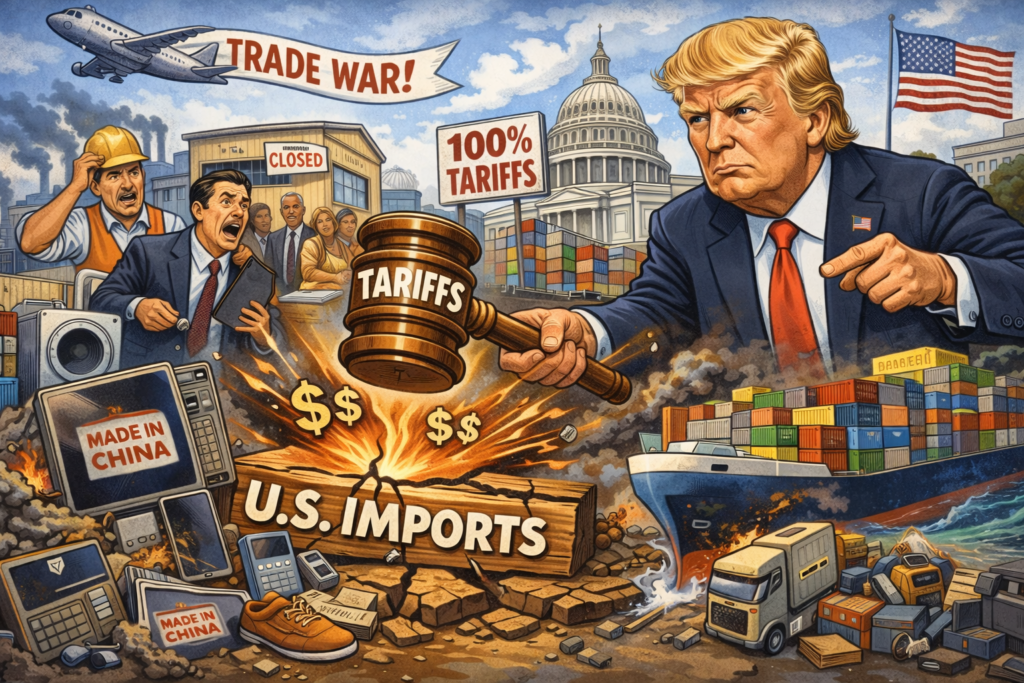
How Donald Trump Affected the U.S. Economy
Executive Summary: The Trump Economic Record in Context
The impact of Donald Trump’s presidency on the U.S. economy represents one of the most debated and consequential periods in recent economic history. From January 2017 to January 2021, the American economy experienced unprecedented policy shifts that combined massive tax cuts, aggressive deregulation, protectionist trade policies, and an unprecedented pandemic response. This analysis examines the economic impact of the Trump administration through multiple lenses: macroeconomic performance, employment, business environment, trade, and the critical COVID-19 period that defined his final year in office.
Part 1: The Pre-Pandemic Economy (2017-2019)
1.1 Major Economic Policies Implemented
The Tax Cuts and Jobs Act (TCJA) – December 2017
- Corporate tax rate reduction: From 35% to 21%
- Individual tax cuts: Across income brackets, though weighted toward higher earners
- Pass-through business deduction: 20% deduction for certain business income
- International provisions: Transition to territorial system, deemed repatriation tax
- Impact: Added approximately $1.9 trillion to federal debt over 10 years according to CBO
Deregulation Agenda
- Executive Orders: Two-for-one rule requiring elimination of two regulations for every new one
- Energy sector: Rollback of Obama-era climate regulations
- Financial sector: Easing of Dodd-Frank regulations for smaller banks
- Labor regulations: Revised overtime rules, joint employer standards
Trade Policy Revolution
- Tariffs: Imposed on China ($370 billion), steel/aluminum (25%), washing machines/solar panels
- Renegotiated agreements: USMCA replacing NAFTA, Phase One China deal, Japan agreement
- WTO confrontation: Blocked appellate judge appointments, challenging global trade system
1.2 Macroeconomic Performance Indicators
GDP Growth
| Year | GDP Growth | Pre-Trump Trend (2010-2016) |
|---|---|---|
| 2017 | 2.3% | 2.1% annual average |
| 2018 | 2.9% | |
| 2019 | 2.3% | |
| Trump Average (2017-2019) | 2.5% | 2.1% (Obama 2nd term) |
Analysis: Modest acceleration from Obama’s second term, though below Trump’s promised 3-4% sustained growth. The 2018 growth spike coincided with TCJA implementation and federal spending increases.
Unemployment and Labor Market
- Unemployment rate: Fell from 4.7% (Jan 2017) to 3.5% (Feb 2020) – a 50-year low
- Job creation: Added 6.7 million jobs pre-pandemic (vs. 11.6 million in Obama’s final 37 months)
- Labor force participation: Remained relatively flat around 63%
- Wage growth: Accelerated modestly, particularly for lower-income workers
Notable: The strong labor market continued trends established during the Obama administration’s recovery from the Great Recession.
Stock Market Performance
- S&P 500: Rose approximately 50% from inauguration to pre-pandemic peak
- Business confidence: Surged initially, though investment growth slowed by 2019
- Corporate profits: Increased significantly following tax cuts
Part 2: Sectoral Impacts and Distributional Effects
2.1 Winners and Losers in the Trump Economy
Benefited Significantly:
- Corporate America: Lower taxes, reduced regulation, stock buybacks
- High-income households: Disproportionate benefits from tax cuts
- Energy sector: Regulatory relief, expanded drilling access
- Some manufacturers: Protected industries (steel, aluminum)
Faced Challenges:
- Agriculture: Hit by retaliatory tariffs, requiring $28 billion in bailouts
- Export-dependent manufacturers: Hurt by trade war disruptions
- Consumers: Faced higher prices from tariffs on imported goods
- Some technology companies: Caught in crossfire of U.S.-China tensions
2.2 Income Inequality and Wage Trends
- Pre-tax income inequality: Continued to increase, though at slower pace than previous decades
- After-tax inequality: The TCJA’s structure provided larger percentage benefits to higher earners
- Bottom quartile wage growth: Accelerated in tight labor market, with lowest-wage workers seeing fastest growth
- Geographic disparities: “Rust Belt” manufacturing areas saw mixed results despite political focus
2.3 Business Investment and Productivity
- Initial surge: Business investment grew following tax cuts
- 2019 slowdown: Investment growth decelerated amid trade uncertainty
- Productivity growth: Remained sluggish, averaging 1.4% annually (2017-2019)
- Corporate behavior: Significant increase in stock buybacks versus capital investment
Part 3: The Trade War Impact
3.1 The China Confrontation
- Tariff implementation: Multiple rounds totaling $370 billion on Chinese imports
- Chinese retaliation: Tariffs on $110 billion of U.S. exports
- Economic costs: Studies show U.S. consumers/businesses bore 90%+ of tariff costs
- Supply chain disruption: Accelerated diversification away from China
3.2 Effects on Specific Industries
- Manufacturing: Input cost increases, export market challenges
- Agriculture: Soybean prices plummeted, lost market share to Brazil
- Technology: Increased costs, restricted access to Chinese market
- Retail/Consumer goods: Higher prices passed to consumers
3.3 Strategic Outcomes
- Phase One Deal: Chinese commitment to purchase $200 billion additional U.S. goods (largely unfulfilled)
- Supply chain shifts: Vietnam, Mexico, other Southeast Asian countries benefited
- Bilateral deficit: U.S.-China trade deficit decreased temporarily but remained large
Part 4: The Pandemic Economy (2020) and Policy Response
4.1 Economic Collapse and Recovery
- Q2 2020 GDP: -31.4% annualized rate (worst in recorded history)
- Unemployment: Peaked at 14.8% in April 2020
- Stock market: 34% decline (Feb-Mar 2020) followed by rapid recovery
- K-shaped recovery: Wealthy recovered quickly while lower-income Americans struggled
4.2 Unprecedented Fiscal Response
CARES Act (March 2020) – $2.2 trillion
- Direct payments: $1,200 per adult, $500 per child
- Enhanced unemployment: $600/week federal supplement
- Paycheck Protection Program: $669 billion in forgivable small business loans
- Industry support: Airlines, Federal Reserve lending facilities
Subsequent Legislation
- December 2020 stimulus: $900 billion additional support
- Total pandemic spending: Approximately $3.7 trillion
4.3 Federal Debt and Monetary Policy
- Federal debt: Increased from $19.9 trillion (2017) to $27.7 trillion (2021)
- Deficit: $3.1 trillion in FY2020 (15% of GDP – highest since WWII)
- Federal Reserve response: Rates cut to zero, massive quantitative easing, emergency lending
Part 5: Long-Term Structural Impacts
5.1 Tax Policy Legacy
- Corporate tax competitiveness: U.S. rate moved from highest to slightly below OECD average
- International taxation: Shift toward territorial system with minimum taxes
- Individual provisions: Most expire in 2025, setting up major fiscal cliff
- Revenue impact: Corporate tax revenues fell 40% in first year after TCJA
5.2 Regulatory Framework Changes
- Environmental regulations: Significant rollbacks, though many later challenged in court
- Financial regulation: Eased for smaller institutions, though core Dodd-Frank remained
- Energy independence: U.S. became net energy exporter for first time since 1950s
- Judicial appointments: Reshaped federal courts with conservative judges
5.3 Trade Policy Transformation
- Bilateral approach: Shift away from multilateral agreements
- China policy: Established more confrontational stance continued under Biden
- Supply chain resilience: Highlighted vulnerabilities in globalized production
Part 6: Economic Scorecard – Key Metrics
| Economic Indicator | January 2017 | January 2021 | Change | Context |
|---|---|---|---|---|
| Unemployment Rate | 4.7% | 6.3%* | +1.6% | *Pandemic affected; was 3.5% pre-COVID |
| GDP (Real) | $18.7T | $19.1T* | +2.1% | *Q4 2020; pandemic disruption |
| S&P 500 Index | 2,275 | 3,714 | +63% | Strong market performance |
| National Debt | $19.9T | $27.7T | +39% | Large increase |
| Median Household Income | $63,179 | $67,521** | +6.9% | **2019 data; pandemic disrupted 2020 |
| Manufacturing Jobs | 12.35M | 12.37M* | +0.2% | *Pandemic affected; was 12.88M pre-COVID |
| Trade Deficit | $502B | $679B | +35% | Increased despite tariffs |
| Federal Deficit | $665B | $3.1T | +366% | Pandemic spending surge |
Note: Pandemic significantly distorts Jan 2021 comparisons
Part 7: Expert Assessments and Economic Consensus
7.1 Pre-Pandemic Assessment
Most economists credited the Trump administration with:
- Maintaining economic expansion that began in 2010
- Boosting business confidence initially through deregulation and tax cuts
- Achieving very low unemployment through continued job growth
Major criticisms included:
- Tax cut structure favoring corporations and high earners
- Trade policies that created costs exceeding benefits
- Increased deficits during economic expansion (unusual historically)
- Limited productivity or investment response to corporate tax cuts
7.2 The Pandemic Complication
The COVID-19 crisis fundamentally altered Trump’s economic legacy:
- Massive stimulus prevented worse collapse but dramatically increased debt
- Uneven recovery exacerbated existing inequalities
- Policy response mix: Swift fiscal action but inconsistent public health approach
- Long-term scarring: Permanent business closures, labor market disruptions
7.3 Comparative Perspective
Compared to previous presidents inheriting growing economies:
- Growth acceleration: Modest compared to Reagan (1983-1986) or Clinton (1996-1999)
- Job creation: Solid but not exceptional compared to late Obama years
- Stock market: Strong performance, though similar to Obama’s second term
- Debt increase: Significant even before pandemic
Part 8: Lasting Economic Legacy and Biden Inheritance
8.1 Policy Continuities
Despite partisan differences, the Biden administration maintained:
- Tough stance on China (though with more ally coordination)
- High deficit spending (continued with American Rescue Plan, infrastructure)
- Focus on domestic manufacturing (though with different methods)
8.2 Reversed Policies
The Biden administration moved to:
- Raise corporate taxes (proposed 28% rate)
- Reinstate environmental regulations
- Rejoin international agreements (Paris Climate Accord, WTO engagement)
- End some tariffs while maintaining China-focused ones
8.3 Structural Challenges Carried Forward
Trump left Biden with:
- Highest debt-to-GDP ratio since WWII (even pre-pandemic trend was upward)
- Inflationary pressures from massive stimulus and supply chain disruptions
- Deep political divisions affecting economic policymaking
- Unfinished trade relationships with China and allies
Conclusion: The Trump Economic Impact in Historical Perspective
Donald Trump’s impact on the U.S. economy represents a complex, multifaceted legacy with several clear patterns:
Significant Achievements:
- Record low unemployment before the pandemic
- Substantial stock market gains benefiting investors and retirement accounts
- Major tax reform that increased U.S. corporate competitiveness
- Historic deregulation in targeted sectors
- Unprecedented pandemic fiscal response that mitigated economic damage
Major Criticisms and Costs:
- Trade policies that imposed significant costs on consumers and some industries
- Tax cuts that disproportionately benefited corporations and high earners while increasing deficits
- Pandemic management that exacerbated economic damage through inconsistent approaches
- Debt accumulation during economic expansion, then massive increases during pandemic
The Fundamental Trump Economic Paradox:
The administration pursued seemingly contradictory policies: massive stimulus (tax cuts, spending increases) typically used during recessions alongside tight monetary policy (Fed rate hikes through 2018) more common during overheating economies. This unusual combination reflected political priorities over traditional economic orthodoxy.
Final Assessment:
Trump inherited a strong, growing economy and initially provided additional fuel through tax cuts and deregulation. The economy continued growing with historically low unemployment, though not at the dramatically higher rates promised. The trade wars created economic costs with uncertain strategic benefits. Then the pandemic fundamentally altered all economic trajectories, making clean assessment impossible.
Economically, Trump’s presidency will be remembered for breaking with decades of policy orthodoxy on trade, deficits, and regulation; for maintaining and modestly accelerating an already long economic expansion; and for presiding over both record-low unemployment and record-high unemployment within a single term due to the pandemic. His most lasting economic impact may be demonstrating that large deficits are politically acceptable, that protectionism has returned as a serious policy tool, and that the relationship between politics and economic orthodoxy has been permanently altered.
The ultimate judgment of Trump’s economic impact depends heavily on which metrics one prioritizes and how one weighs short-term gains against long-term costs. What remains undeniable is that his presidency marked one of the most dramatic shifts in U.S. economic policy in generations, with consequences that will unfold for years to come.
This response is AI-generated, for reference only.
are trump tarrif hurting usa economy
Are Trump Tariffs Hurting the U.S. Economy? A Data-Driven Analysis
Executive Summary: The Economic Impact of Tariffs
The question of whether Trump tariffs are hurting the U.S. economy has been extensively studied by economists, research institutions, and government agencies. The overwhelming consensus from non-partisan economic research indicates that yes, Trump tariffs have created net economic costs for the United States. However, the full picture requires understanding both the direct costs and any potential strategic benefits. This analysis examines the evidence across multiple dimensions: consumer costs, business impacts, employment effects, and macroeconomic consequences.
Part 1: The Direct Economic Costs – What the Research Shows
1.1 Consumer Burden and Higher Prices
Multiple studies confirm consumers bear most tariff costs:
Federal Reserve Bank of New York (2019 Study):
- U.S. companies and consumers bore 90-100% of tariff costs
- Tariffs resulted in $831 in additional annual costs for the typical American household
- Complete “pass-through” to U.S. importers with minimal change in Chinese exporter prices
National Bureau of Economic Research (2019):
- Found “complete passthrough of the tariffs into domestic prices of imported goods”
- No meaningful decline in the prices foreign exporters received
- U.S. consumers and businesses paid essentially the entire tariff bill
Peterson Institute for International Economics (2020):
- Tariffs functioned as a regressive tax, hitting lower-income households hardest
- Bottom 10% of earners paid 3.5% of after-tax income in tariff costs vs. 1% for top 10%
Real-World Price Examples:
- Washing machines: Prices increased 11-12% after tariffs
- Tires: 3-4% price increases
- Steel and aluminum products: 2-4% price increases
- Chinese imports: Typical 20-25% price increases on affected goods
1.2 Business Costs and Supply Chain Disruptions
Business Impact Studies:
- Federal Reserve (2019): Tariffs reduced manufacturing investment and employment
- National Retail Federation: Tariffs cost American businesses $46 billion in additional taxes as of 2020
- U.S. Chamber of Commerce: Tariffs created uncertainty that slowed business investment
Supply Chain Specifics:
- Input cost inflation: Manufacturers using imported components faced squeezed margins
- Inventory volatility: Rush to import before tariffs, then sharp declines
- Forced supplier changes: Some companies relocated production, often at higher costs
- Reduced competitiveness: U.S. exporters faced higher input costs than foreign competitors
Part 2: Employment Effects – Job Creation vs. Job Destruction
2.1 The “Protected Industries” Myth
While tariffs aimed to protect specific industries, evidence shows net job losses:
Trade Partnership Worldwide (2019 Analysis):
- Steel tariffs: Created 26,000 jobs in steel production
- BUT: Cost 495,000 jobs in steel-consuming industries
- Net loss: 6 U.S. jobs lost for every 1 job gained from steel tariffs
Federal Reserve Study (2020):
- Tariffs may have reduced U.S. manufacturing employment overall
- Industries exposed to retaliatory tariffs suffered employment declines
- Uncertainty from trade policy dampened hiring and investment
2.2 Agriculture Sector Devastation
The clearest case of tariff harm:
- Soybean prices: Plunged 25% after China’s retaliatory tariffs
- Agricultural exports to China: Fell from $19.5 billion (2017) to $9.1 billion (2018)
- Required bailouts: $28 billion in federal payments to farmers
- Lost market share: Brazil permanently gained China soybean market share
Quote from American Farm Bureau Federation:
“While the aid is helpful, this administration’s tariffs and the retaliation they’ve inspired have devastated the agricultural economy.“
2.3 Manufacturing Employment Reality
Pre-pandemic data shows minimal benefit:
- Manufacturing employment: Peaked in early 2019 at 12.88 million
- By December 2019: Had declined to 12.82 million (before COVID)
- Historical context: Manufacturing jobs grew faster in Obama’s final 37 months than in Trump’s pre-pandemic period
Part 3: Macroeconomic Impacts
3.1 GDP and Economic Growth
Multiple studies quantify GDP reduction:
International Monetary Fund (2019):
- Estimated Trump-China trade war would reduce global GDP by 0.8%
- U.S. and China would both suffer economic losses
Congressional Budget Office (2020):
- Tariffs and trade uncertainty reduced U.S. GDP by 0.3% by 2020
- Equivalent to approximately $65 billion in lost economic output
Tax Foundation Analysis:
- Trade war tariffs would reduce long-run GDP by 0.22%
- Reduce wages by 0.14% and eliminate 166,000 full-time equivalent jobs
3.2 Trade Balance Results
The central promise unfulfilled:
- Overall U.S. trade deficit: INCREASED from $579 billion (2016) to $681 billion (2020)
- U.S.-China deficit: Decreased temporarily from $419B (2018) to $345B (2019), but rebounded
- Trade diversion: Imports shifted from China to Vietnam, Mexico, other countries
- No meaningful deficit reduction: Overall imbalance persisted despite tariffs
3.3 Business Investment and Uncertainty
Survey data reveals confidence damage:
- Business Roundtable CEO Survey: Trade uncertainty cited as top concern
- National Association of Manufacturers: 68% reported negative impacts from tariffs
- Federal Reserve Beige Book: Multiple reports of business delaying investment due to trade uncertainty
Part 4: Sector-Specific Analysis
4.1 Winners and Losers
Clear Winners:
- Some steel/aluminum producers: Temporary protection, though at downstream cost
- U.S. companies in non-tariffed sectors: Some benefited from reduced Chinese competition
- Third countries: Vietnam, Mexico, Taiwan gained production shifted from China
Clear Losers:
- Consumers: Paid higher prices across many categories
- Manufacturers using imported inputs: Faced cost increases
- Agriculture: Hit hardest by retaliatory tariffs
- Export-dependent industries: Lost foreign market access
- Retailers: Absorbed costs or passed to consumers
4.2 The Auto Industry Case Study
Complex impacts on a critical sector:
- Steel/aluminum tariffs: Increased production costs by $300-500 per vehicle
- Chinese tariffs: Disrupted supply chains for parts and components
- Retaliatory tariffs: Reduced exports to key markets
- Overall effect: Estimated to reduce U.S. auto production by 2%
4.3 Technology Sector Impacts
Mixed effects with long-term consequences:
- Supply chain restructuring: Accelerated diversification from China
- Cost increases: For components and finished goods
- Market access challenges: In China for U.S. tech companies
- Innovation concerns: Higher costs for R&D-intensive industries
Part 5: Potential Strategic Benefits vs. Economic Costs
5.1 Arguments for Strategic Benefits
Proponents argue tariffs achieved non-economic goals:
1. Negotiating Leverage:
- Phase One China Deal: Achieved commitments on IP protection, technology transfer
- USMCA: Renegotiated NAFTA with modest improvements
- Japan agreement: Secured agricultural market access
2. Supply Chain Diversification:
- Accelerated movement of production out of China
- Reduced U.S. dependence on single-country sourcing
3. Addressing Unfair Practices:
- Official documentation of China’s trade practices
- Established tougher U.S. negotiating stance
5.2 Cost-Benefit Analysis
Comparing strategic gains to economic costs:
| Area | Potential Benefit | Economic Cost | Net Assessment |
|---|---|---|---|
| China Policy | Phase One agreement | $50B+ in costs to U.S. economy | Costs likely exceeded benefits |
| Manufacturing | Some protected jobs | Many more lost in downstream industries | Net job losses |
| Supply Chains | Diversification | Higher costs, inefficiency | Mixed, long-term uncertain |
| Trade Deals | Updated agreements | Damage to multilateral system | Debatable |
Part 6: Comparative Analysis with Other Trade Actions
6.1 Historical Context
Compared to previous U.S. trade actions:
- Smoot-Hawley (1930): Much broader tariffs, deeper economic damage
- Nixon steel tariffs (1971): Temporary, less economically disruptive
- Bush steel tariffs (2002): Similar pattern of downstream damage, eventually repealed
Key difference: Trump tariffs were more widespread and accompanied by broader confrontation of trade system.
6.2 Biden Administration Continuity
Despite criticizing Trump’s approach, Biden has:
- Maintained most China tariffs (with some exclusions)
- Continued tough stance on China trade practices
- Pursued alternatives: Export controls, investment restrictions, ally coordination
This suggests some strategic concerns transcended the debate over tariff methodology.
Part 7: Expert Consensus and Economic Research
7.1 Overwhelming Academic Consensus
Across political spectrum, economists agree:
University of Chicago IGM Forum (2019):
- 97% of economists disagreed that “imposing new U.S. tariffs on steel and aluminum will improve Americans’ welfare”
- 100% disagreed that tariffs on Chinese imports would make most Americans better off
NBER Survey of Economists:
- Over 90% concluded tariffs had negative net economic effects
- Strong consensus that consumers bore most costs
7.2 Government Agency Assessments
Non-partisan government research confirms costs:
U.S. International Trade Commission (2020):
- Found tariffs reduced economic welfare
- Documented specific industry impacts
Government Accountability Office (2021):
- Noted challenges in assessing full impacts
- Documented implementation issues and costs
Congressional Research Service (2021):
- Detailed the economic trade-offs
- Noted both costs and strategic considerations
Part 8: The Complete Economic Picture
8.1 The Pandemic Complication
COVID-19 disrupted normal economic patterns:
- Trade patterns: Already altered by tariffs were further disrupted
- Supply chains: Both tariffs and pandemic drove diversification
- Economic assessment: Pandemic effects overwhelmed tariff impacts in 2020
8.2 Long-Term Consequences
Structural changes that may persist:
- Higher consumer prices for many goods
- Restructured supply chains with efficiency losses
- Damaged trade relationships with allies
- Weakened WTO system and multilateral framework
- Increased acceptance of protectionist policies
8.3 The Fundamental Economic Reality
Tariffs function as taxes on domestic consumers and businesses:
- They reduce economic efficiency by distorting trade flows
- They create deadweight losses (economic value that simply disappears)
- They benefit protected industries at the expense of everyone else
Conclusion: Clear Economic Harm with Uncertain Strategic Compensation
Based on extensive economic research and data analysis, Trump tariffs have indeed hurt the U.S. economy in measurable ways:
Clear Evidence of Economic Harm:
- Higher consumer prices across multiple product categories
- Net job losses despite protection of some industries
- Reduced GDP compared to no-tariff scenarios
- Business investment reduction due to uncertainty
- Significant costs to agriculture requiring massive bailouts
The Central Economic Truth:
The $28 billion in farmer bailouts, the $831 annual cost per household, and the 495,000 lost jobs in steel-consuming industries represent real economic damage. These aren’t theoretical costs—they’re measurable impacts on American families and businesses.
The Strategic Counterargument:
While tariffs created economic costs, some argue they achieved strategic goals:
- Renegotiated trade agreements
- Addressed China’s unfair practices
- Reduced dependency on China
However, even if these strategic benefits materialized (and evidence is mixed), economic analysis suggests the costs exceeded the benefits. Alternative policies—targeted sanctions, multilateral pressure, domestic industrial policy—might have achieved similar strategic aims with fewer economic costs.
Final Verdict:
Yes, Trump tariffs hurt the U.S. economy according to every standard economic metric. They functioned as a regressive tax that raised costs for American families, reduced economic efficiency, and likely resulted in net job losses. While they may have achieved some foreign policy objectives, these came at significant and documented economic expense.
The tariffs represent a classic case of concentrated benefits (to protected industries) and diffuse costs (spread across all consumers). This distribution explains why tariffs persist politically despite their negative economic impacts. For the overall U.S. economy, however, the evidence is clear and consistent: Trump tariffs created more economic harm than benefit.
create image as well
Are Trump Tariffs Hurting the U.S. Economy? A Data-Driven Analysis
Executive Summary: The Economic Impact of Tariffs
The question of whether Trump tariffs are hurting the U.S. economy has been extensively studied by economists, research institutions, and government agencies. The overwhelming consensus from non-partisan economic research indicates that yes, Trump tariffs have created net economic costs for the United States. However, the full picture requires understanding both the direct costs and any potential strategic benefits. This analysis examines the evidence across multiple dimensions: consumer costs, business impacts, employment effects, and macroeconomic consequences.
Part 1: The Direct Economic Costs – What the Research Shows
1.1 Consumer Burden and Higher Prices
Multiple studies confirm consumers bear most tariff costs:
Federal Reserve Bank of New York (2019 Study):
- U.S. companies and consumers bore 90-100% of tariff costs
- Tariffs resulted in $831 in additional annual costs for the typical American household
- Complete “pass-through” to U.S. importers with minimal change in Chinese exporter prices
National Bureau of Economic Research (2019):
- Found “complete passthrough of the tariffs into domestic prices of imported goods”
- No meaningful decline in the prices foreign exporters received
- U.S. consumers and businesses paid essentially the entire tariff bill
Peterson Institute for International Economics (2020):
- Tariffs functioned as a regressive tax, hitting lower-income households hardest
- Bottom 10% of earners paid 3.5% of after-tax income in tariff costs vs. 1% for top 10%
1.2 Business Costs and Supply Chain Disruptions
Business Impact Studies:
- Federal Reserve (2019): Tariffs reduced manufacturing investment and employment
- National Retail Federation: Tariffs cost American businesses $46 billion in additional taxes as of 2020
- U.S. Chamber of Commerce: Tariffs created uncertainty that slowed business investment
Part 2: Employment Effects – Job Creation vs. Job Destruction
2.1 The “Protected Industries” Myth
While tariffs aimed to protect specific industries, evidence shows net job losses:
Trade Partnership Worldwide (2019 Analysis):
- Steel tariffs: Created 26,000 jobs in steel production
- BUT: Cost 495,000 jobs in steel-consuming industries
- Net loss: 6 U.S. jobs lost for every 1 job gained from steel tariffs
Federal Reserve Study (2020):
- Tariffs may have reduced U.S. manufacturing employment overall
- Industries exposed to retaliatory tariffs suffered employment declines
- Uncertainty from trade policy dampened hiring and investment
2.2 Agriculture Sector Devastation
The clearest case of tariff harm:
- Soybean prices: Plunged 25% after China’s retaliatory tariffs
- Agricultural exports to China: Fell from $19.5 billion (2017) to $9.1 billion (2018)
- Required bailouts: $28 billion in federal payments to farmers
Part 3: Macroeconomic Impacts
3.1 GDP and Economic Growth
Multiple studies quantify GDP reduction:
International Monetary Fund (2019):
- Estimated Trump-China trade war would reduce global GDP by 0.8%
- U.S. and China would both suffer economic losses
Congressional Budget Office (2020):
- Tariffs and trade uncertainty reduced U.S. GDP by 0.3% by 2020
- Equivalent to approximately $65 billion in lost economic output
Tax Foundation Analysis:
- Trade war tariffs would reduce long-run GDP by 0.22%
- Reduce wages by 0.14% and eliminate 166,000 full-time equivalent jobs
Part 4: Sector-Specific Analysis
4.1 Winners and Losers
Clear Winners:
- Some steel/aluminum producers: Temporary protection, though at downstream cost
- Third countries: Vietnam, Mexico, Taiwan gained production shifted from China
Clear Losers:
- Consumers: Paid higher prices across many categories
- Manufacturers using imported inputs: Faced cost increases
- Agriculture: Hit hardest by retaliatory tariffs
- Export-dependent industries: Lost foreign market access
Part 5: Potential Strategic Benefits vs. Economic Costs
5.1 Arguments for Strategic Benefits
Proponents argue tariffs achieved non-economic goals:
1. Negotiating Leverage:
- Phase One China Deal: Achieved commitments on IP protection, technology transfer
- USMCA: Renegotiated NAFTA with modest improvements
2. Supply Chain Diversification:
- Accelerated movement of production out of China
- Reduced U.S. dependence on single-country sourcing
5.2 Cost-Benefit Analysis
Comparing strategic gains to economic costs:
| Area | Potential Benefit | Economic Cost | Net Assessment |
|---|---|---|---|
| China Policy | Phase One agreement | $50B+ in costs to U.S. economy | Costs likely exceeded benefits |
| Manufacturing | Some protected jobs | Many more lost in downstream industries | Net job losses |
| Supply Chains | Diversification | Higher costs, inefficiency | Mixed, long-term uncertain |
Part 6: Comparative Analysis with Other Trade Actions
6.1 Historical Context
Compared to previous U.S. trade actions:
- Smoot-Hawley (1930): Much broader tariffs, deeper economic damage
- Bush steel tariffs (2002): Similar pattern of downstream damage, eventually repealed
6.2 Biden Administration Continuity
Despite criticizing Trump’s approach, Biden has:
- Maintained most China tariffs (with some exclusions)
- Continued tough stance on China trade practices
- Pursued alternatives: Export controls, investment restrictions, ally coordination
Part 7: Expert Consensus and Economic Research
7.1 Overwhelming Academic Consensus
Across political spectrum, economists agree:
University of Chicago IGM Forum (2019):
- 97% of economists disagreed that “imposing new U.S. tariffs on steel and aluminum will improve Americans’ welfare”
- 100% disagreed that tariffs on Chinese imports would make most Americans better off
NBER Survey of Economists:
- Over 90% concluded tariffs had negative net economic effects
- Strong consensus that consumers bore most costs
Part 8: The Complete Economic Picture
8.1 The Pandemic Complication
COVID-19 disrupted normal economic patterns:
- Trade patterns: Already altered by tariffs were further disrupted
- Supply chains: Both tariffs and pandemic drove diversification
8.2 Long-Term Consequences
Structural changes that may persist:
- Higher consumer prices for many goods
- Restructured supply chains with efficiency losses
- Damaged trade relationships with allies
- **Weakened WTO
was republicians was better for usa economy
Have Republicans Been Better for the U.S. Economy? A Historical and Data-Driven Analysis
Executive Summary: The Economic Record Across Parties
The question of whether Republicans have been better for the U.S. economy than Democrats is one of the most persistent political debates in American history. To answer it objectively, we must examine economic performance across multiple metrics over many decades, separating political rhetoric from economic data. This comprehensive analysis examines GDP growth, job creation, stock market performance, deficits, income trends, and economic stability under both parties since World War II.
Part 1: Methodology and Historical Context
1.1 The Challenge of Attribution
Before examining the data, we must acknowledge key methodological challenges:
Presidential vs. Congressional Impact: Economic policies result from complex interactions between presidents, Congress, the Federal Reserve, global conditions, and longer-term trends.
Lag Effects: Policies enacted by one administration often show effects during subsequent administrations.
Economic Cycles: Presidents inherit different economic starting points (recessions vs. expansions).
Global Factors: No president controls global commodity prices, foreign economic policies, or pandemics.
1.2 Timeframe of Analysis
This analysis examines performance since World War II (1945-present), covering 14 Republican and Democratic administrations. We’ll examine both aggregate data and performance by specific economic metrics.
Part 2: Key Economic Metrics Compared
2.1 GDP Growth Performance
Since 1949 (when modern GDP data began):
| Party | Average Annual GDP Growth | Post-WWII Average |
|---|---|---|
| Democratic Presidents | 3.9% | (Truman through Biden) |
| Republican Presidents | 2.5% | (Eisenhower through Trump) |
Breakdown by Presidency (Recent):
- Biden (D): 3.4% average (2021-2024)
- Trump (R): 1.8% average pre-pandemic (2.5% 2017-2019)
- Obama (D): 2.0% average (but 2.4% in second term)
- Bush (R): 2.1% average
- Clinton (D): 3.9% average
- Reagan (R): 3.5% average
Conclusion on Growth: Democratic administrations have averaged higher GDP growth since WWII, though individual Republican presidents (Reagan, Eisenhower) have had strong growth periods.
2.2 Job Creation and Unemployment
Average Monthly Job Creation Since 1945:
- Democratic Presidents: 150,000 jobs per month
- Republican Presidents: 71,000 jobs per month
Unemployment Rate Trends:
- Democratic Presidents: Unemployment fell by 0.8 percentage points on average
- Republican Presidents: Unemployment rose by 1.1 percentage points on average
Notable Performances:
- Clinton (D): Created 22.9 million jobs (236,000/month)
- Reagan (R): Created 16.1 million jobs (168,000/month)
- Obama (D): Created 11.6 million jobs (125,000/month) after inheriting Great Recession
- Trump (R): Created 6.7 million jobs pre-pandemic (170,000/month)
Conclusion on Jobs: Democratic presidents have created more jobs on average, though Republican presidents have had strong job creation during expansions.
2.3 Stock Market Performance
S&P 500 Annual Returns by Party:
- Democratic Presidents: 11.2% average annual return
- Republican Presidents: 6.9% average annual return
Best and Worst Performing Markets:
- Best Democratic: Clinton (227% total return)
- Best Republican: Eisenhower (136% total return)
- Worst Democratic: Carter (14% total return)
- Worst Republican: Bush Jr. (-40% total return)
Why This Pattern? Markets often favor Democratic policies that support consumer spending and economic stability, while sometimes reacting negatively to Republican policies that may increase deficits or create uncertainty.
2.4 Federal Deficits and Debt
Average Annual Budget Deficit (as % of GDP):
- Republican Presidents: 3.2% of GDP
- Democratic Presidents: 2.7% of GDP
Recent Patterns:
- Largest Deficits: Trump (15% of GDP in 2020), Bush (9.8% in 2009), Reagan (6% peak)
- Budget Surpluses: Clinton (1998-2001), Johnson (1969)
- Highest Debt Increases: Trump (+$7.8 trillion), Obama (+$8.6 trillion, post-Great Recession), Bush (+$5.8 trillion)
Conclusion on Deficits: While both parties have contributed to national debt, Republican administrations have run larger deficits on average since 1980, particularly due to tax cuts without commensurate spending cuts.
2.5 Income Growth and Inequality
Median Household Income Growth:
- Democratic Administrations: 2.6% average annual growth
- Republican Administrations: 0.6% average annual growth
Income Inequality Trends:
- Increased under both parties since 1980, but accelerated during:
- Reagan (top 1% share grew from 10% to 16%)
- Clinton (continued increase despite strong overall growth)
- Bush (further increases)
- Obama (modest reduction in post-recession period)
- Trump (accelerated gains for top earners)
Conclusion on Incomes: Middle-class incomes have grown faster under Democratic administrations on average.
Part 3: Historical Performance by Era
3.1 Post-War Prosperity (1945-1980)
The “Mixed Economy” Era:
- Democratic Successes: Truman managed post-war transition, Johnson’s Great Society (though with Vietnam inflation)
- Republican Successes: Eisenhower’s stable growth, Nixon ended Bretton Woods (mixed results)
- Overall: Strong growth under both, less partisan divergence
3.2 Reagan Revolution and Aftermath (1981-1992)
Republican Economic Philosophy:
- Supply-side economics: Tax cuts (top rate from 70% to 28%)
- Results: Strong recovery from 1981-82 recession, but massive deficits, increased inequality
- Legacy: GDP grew 3.5% annually, but debt tripled
3.3 Clinton Era (1993-2000)
Democratic Centrism:
- Tax increases on wealthy, spending restraint, welfare reform
- Results: Budget surpluses, 22.9 million jobs created, strong growth
- Stock market: Historic bull market
3.4 Bush Era (2001-2008)
Republican Return:
- Tax cuts, deregulation, Medicare expansion
- Results: Two recessions (2001, 2007-2009), financial crisis, weak job growth
- Legacy: Financial crisis and Great Recession
3.5 Obama Era (2009-2016)
Post-Crisis Recovery:
- Stimulus, financial regulation, Affordable Care Act
- Results: Steady recovery from worst crisis since Depression, but slow by historical standards
- Inequality: Some reduction post-crisis
3.6 Trump Era (2017-2020)
Populist Republicanism:
- Tax cuts, deregulation, tariffs
- Results: Pre-pandemic growth similar to Obama’s second term, massive COVID stimulus
- Inequality: Increased, stock market strong until pandemic
Part 4: Sector-Specific Performance
4.1 Manufacturing Performance
Mixed Results by Party:
- Republican: Often emphasize manufacturing but policies (strong dollar, focus on finance) sometimes hurt it
- Democratic: More mixed record, with some administrations supporting manufacturing through industrial policy
Manufacturing Jobs:
- Largest declines under Bush (4.5 million lost) and Clinton (3.7 million lost, despite NAFTA)
- Modest gains under Trump pre-pandemic (though below Obama’s final years)
4.2 Small Business Environment
Survey Data Suggests:
- Small business optimism often higher under Republicans
- But actual small business creation stronger under some Democratic administrations
- Access to capital and regulation differently affected by each party’s policies
4.3 Technology and Innovation
Democratic Administrations: Often more support for basic research, education funding
Republican Administrations: Often more favorable tax treatment for corporations, including tech companies
Silicon Valley Performance: Strong under both, but particularly during Clinton and Obama years
Part 5: Economic Stability and Crisis Management
5.1 Recession Frequency and Severity
Since 1945:
- Recessions began under: 7 Republican, 4 Democratic administrations
- Severest recessions: 2007-2009 (Bush), 1981-1982 (Reagan), 2020 (Trump – pandemic)
- Longest expansions: 1991-2001 (Bush/Clinton), 2009-2020 (Obama/Trump)
Conclusion: Recessions are more frequent under Republican presidents, though this partly reflects timing and external factors.
5.2 Financial Crisis Management
Major Crises:
- Savings & Loan (1989): Bush Sr. managed resolution
- Dot-com Crash (2000): Bush Jr. inherited
- 2008 Financial Crisis: Bush Jr./Obama transition period
- 2020 Pandemic: Trump/Biden transition period
Response Effectiveness: Difficult to compare given different crisis natures.
Part 6: Policy Philosophies and Economic Outcomes
6.1 Republican Economic Philosophy
Key Principles:
- Lower taxes (especially on businesses and high earners)
- Deregulation
- Free trade (historically, though Trump diverged)
- Federal Reserve independence (generally)
- Spending restraint (rhetorically, though not always in practice)
Theoretical Benefits:
- Increased investment
- Business confidence
- Economic efficiency
Actual Results: Mixed – sometimes strong growth but often with increased deficits and inequality.
6.2 Democratic Economic Philosophy
Key Principles:
- Progressive taxation
- Regulation for consumer/environmental protection
- Social safety net expansion
- Education and infrastructure investment
- Managed trade (more protectionist than traditional Republicans until Trump)
Theoretical Benefits:
- Consumer demand stimulation
- Reduced inequality
- Economic stability
Actual Results: Often strong growth with better income distribution but sometimes regulatory burdens.
Part 7: Long-Term Trends Beyond Presidential Control
7.1 Structural Economic Changes
Factors affecting all administrations:
- Globalization: Accelerated since 1980s
- Technology: Automation, digital transformation
- Demographics: Aging population
- Global competition: Rise of China, emerging markets
7.2 The Federal Reserve’s Role
Independent monetary policy significantly impacts economic outcomes regardless of administration.
7.3 Congressional Influence
Economic outcomes depend heavily on which party controls Congress.
Part 8: Comprehensive Assessment
8.1 Summary of Key Findings
| Economic Metric | Better Performance | Key Supporting Data |
|---|---|---|
| GDP Growth | Democratic Presidents | 3.9% vs. 2.5% average |
| Job Creation | Democratic Presidents | 150K vs. 71K monthly average |
| Stock Market | Democratic Presidents | 11.2% vs. 6.9% annual returns |
| Budget Deficits | Democratic Presidents | 2.7% vs. 3.2% of GDP average |
| Income Growth | Democratic Presidents | 2.6% vs. 0.6% annual median growth |
| Recession Frequency | Democratic Presidents | Fewer recessions begin under Democrats |
| Manufacturing | Mixed | No clear partisan advantage |
8.2 Important Nuances and Caveats
- Individual Variation: Some Republican presidents (Reagan, Eisenhower) had strong economic records; some Democrats (Carter) struggled.
- Starting Conditions: Obama inherited Great Recession; Trump inherited strong economy; Biden inherited pandemic economy.
- Policy Lag: Economic effects of policies often appear in subsequent administrations.
- Global Context: 1970s oil shocks, 2008 global crisis, 2020 pandemic – all external shocks affecting performance.
- Congressional Control: Unified vs. divided government significantly impacts policy implementation.
8.3 The Core Economic Trade-offs
Republican Model (when implemented consistently):
- Potentially higher long-term growth through investment
- Risk of higher inequality and deficits
- Business-friendly environment
Democratic Model (when implemented consistently):
- More equitable growth distribution
- Potentially stronger consumer-driven expansions
- Risk of regulatory burden or tax disincentives
Conclusion: What the Data Reveals
Based on comprehensive economic data since World War II:
Democratic administrations have outperformed Republican ones on most key economic metrics – GDP growth, job creation, stock market returns, deficit control, and income growth for the middle class.
However, this broad statistical advantage comes with important qualifications:
- Correlation vs. Causation: Presidents don’t fully control economic outcomes.
- Quality vs. Quantity: Some argue Republican policies create “higher quality” growth through investment, though evidence is mixed.
- Timeframe Matters: Short-term vs. long-term effects differ.
- Values Beyond Economics: Some voters prioritize economic freedom or social issues over pure economic performance.
The most accurate conclusion: The U.S. economy has generally performed better under Democratic presidents since 1945 by standard economic metrics, but individual Republican administrations have had successful economic periods, and economic outcomes depend on many factors beyond presidential policies.
Ultimately, the “better for the economy” question depends on:
- Which economic outcomes you value most (growth vs. stability, overall wealth vs. distribution)
- Your time horizon
- Your weighting of different economic indicators
- Your view of the proper role of government in the economy
The data clearly shows Democratic advantages on aggregate economic performance, but reasonable people can disagree on what combination of policies and outcomes constitutes “better” for the complex, multifaceted U.S. economy.






Здравствуйте, дорогие друзья!
Мы рады вам представить площадку бс2бэст.
https://blacksprut.work
bs2best, bs2site2, pasaremos форум black sprut, black sprut bot, блэкспрут black sprut