
Table of Contents
The Inauguration of a President: America’s Enduring Ritual of Democratic Renewal
Every four years, as winter settles over Washington, D.C., the United States engages in a ceremony that represents both the simplest democratic principle and the most complex civic ritual: the Presidential Inauguration. This peaceful transfer of power, often observed by millions worldwide with a mixture of awe and curiosity, constitutes the foundational bedrock of American constitutional democracy. More than merely a swearing-in ceremony, an inauguration is a multi-layered event steeped in constitutional mandate, historical precedent, political theater, and potent national symbolism. It is the precise moment when the abstract will of the people, expressed through the ballot box, transforms into concrete executive authority.
This comprehensive examination delves deep into the Presidential Inauguration from every conceivable angle. We will trace its remarkable evolution from a quiet, uncertain oath administered in New York City to a globally televised media spectacle costing hundreds of millions of dollars. We will decode the intricate legal and ceremonial components that give the day its structure and meaning, from the 35 words mandated by the Constitution to the unofficial traditions that have accumulated like layers of sedimentary rock over two centuries. We will examine the profound symbolism embedded in its speeches, parades, and balls, and analyze how this symbolism has been interpreted, challenged, and reinforced throughout American history.
Furthermore, we will address specific contemporary questions surrounding recent inaugurations, particularly that of Donald J. Trump in 2017, analyzing the oath itself, the politics of loyalty, and the public’s fascination with tangential connections. We will explore the logistical marvel that modern inaugurations have become, the escalating security challenges, and the delicate balance between public accessibility and national safety. Finally, we will consider what the future may hold for this ritual in an era of deep political polarization, digital fragmentation, and evolving threats to democratic norms. This journey through the history and meaning of inauguration is ultimately a journey through America’s understanding of itself—its aspirations, its contradictions, and its enduring commitment to the revolutionary idea that power derives from the consent of the governed.
The Constitutional Bedrock: The Oath That Binds the Republic
To understand the American inauguration, one must begin with its legal genesis. The ceremony exists first and foremost to fulfill explicit constitutional requirements. This legal bedrock is what separates the pageantry from the transfer of legitimate authority.
Article II, Section 1: The Founding Fathers’ 35-Word Framework
The U.S. Constitution, a document remarkable for both its breadth of vision and its economy of language, is strikingly brief on the mechanics of presidential assumption. Article II, Section 1, Clause 8 states definitively:
“Before he enter on the Execution of his Office, he shall take the following Oath or Affirmation:—’I do solemnly swear (or affirm) that I will faithfully execute the Office of President of the United States, and will to the best of my Ability, preserve, protect and defend the Constitution of the United States.'”
This is the non-negotiable core of Inauguration Day. Every other element—the inaugural address, the parade, the galas, the poet, the prayers—is tradition, elaboration, or celebration. The oath itself serves several critical, intertwined purposes:
The Moment of Legal Transfer: It legally demarcates the precise instant the president-elect ceases to be a private citizen or candidate and becomes the President of the United States, vested with all the powers and responsibilities of the office.
A Sacred Covenant, Not Just a Promise: It frames the presidency not as a position of personal power but as a sacred stewardship. The primary duty is not to party, platform, or populace alone, but foremost to the Constitution—the foundational document that creates and limits the office itself.
Public Accountability and Transparency: The requirement that the oath be administered “before he enter on the Execution of his Office” implies a public act. By tradition and now expectation, this oath is administered in a grand public forum, witnessed by the nation and the world. This transforms it from a private promise into a direct, solemn covenant with the American people.
The 20th Amendment: Correcting a Flaw in the Timeline
For the first 144 years of the republic, the inauguration was held on March 4. This lengthy four-month interregnum between Election Day in November and Inauguration Day in spring, known as the “lame-duck” period, was born of logistical necessity in an 18th-century world of slow travel and communication. However, it proved increasingly cumbersome and politically dangerous.
The crisis of the secession winter of 1860-61, when a defeated President James Buchanan was largely powerless as southern states left the Union before Abraham Lincoln could take office, starkly revealed the flaw. A sitting president with diminished authority and a president-elect with no authority created a perilous vacuum. Other periods of economic crisis, like the Great Depression between Herbert Hoover’s defeat and Franklin D. Roosevelt’s inauguration, further highlighted the problem.
The ratification of the 20th Amendment in 1933 provided the crucial correction. Known as the “Lame Duck Amendment,” it stated:
“The terms of the President and Vice President shall end at noon on the 20th day of January… and the terms of their successors shall then begin.”
This established January 20 as the permanent “Inauguration Day” (with a provision to move public ceremonies to the 21st if the 20th falls on a Sunday). The public swearing-in ceremony is scheduled for approximately noon, often preceded by a private oath administered exactly at noon to adhere strictly to the constitutional timeline, as was done by President Ronald Reagan in 1985 due to frigid weather.
Anatomy of a Modern Inauguration: A Choreographed Day of Democracy
A contemporary inauguration is a meticulously planned, multi-day series of events involving thousands of participants, from military units to volunteer citizens. Each component, from the solemn to the celebratory, carries its own historical weight and symbolic meaning.
The Prelude: Morning Rituals of Reflection and Transition
The day begins with traditions that emphasize the gravity of the transition.
The Morning Worship Service: A practice solidified by Franklin D. Roosevelt, the incoming President and First Family attend a private church service. This moment of reflection underscores the role of personal faith and solemn contemplation before assuming what many have described as the most burdensome job in the world. It connects the leader to a sense of purpose higher than politics.
The White House Meeting: Perhaps the most potent visual symbol of peaceful transition occurs next. The outgoing President and First Lady host the incoming First Family for tea or coffee at the White House. Despite often bitter electoral campaigns, this tradition of civility is almost universally maintained. The two couples then travel together to the Capitol for the ceremony—a powerful, silent testament to the continuity of government over individual ambition.
The Central Act: The Swearing-In Ceremony on Capitol Hill
Since 1981, with Ronald Reagan, the ceremony has been held on the West Front of the U.S. Capitol, offering a majestic vista down the National Mall toward the Lincoln Memorial. The order of proceedings is precise and rich with symbolism:
The Vice Presidential Oath: Administered first. The Vice President-elect selects who will administer the oath, often a senior judge or personal mentor. Kamala Harris, for instance, was sworn in by Justice Sonia Sotomayor, the first Latina Supreme Court Justice.
Musical Selections: Performances by military bands, star vocalists, or instrumentalists are carefully chosen to reflect thematic elements of the incoming administration or moments of national unity.
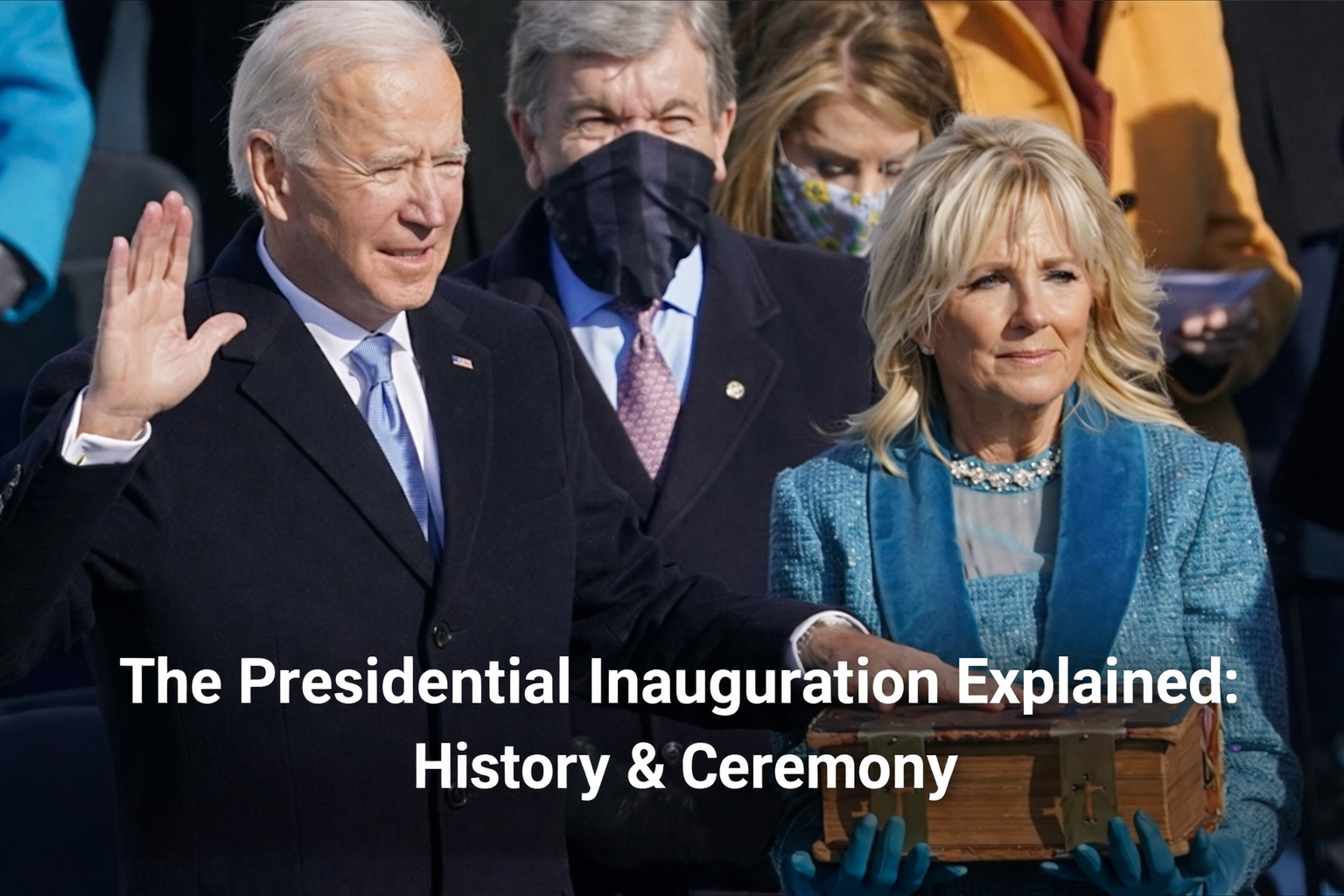
The Presidential Oath: The constitutional climax. The oath is administered by the Chief Justice of the United States, representing the judicial branch’s role in legitimizing the executive. The use of a Bible or other meaningful text is traditional but not constitutionally required. The most famous deviation was Theodore Roosevelt in 1901, who took no oath on a Bible following McKinley’s assassination. The phrase “So help me God,” appended by George Washington and repeated voluntarily by every president since, is a profound traditional addition that invokes divine guidance in fulfilling the oath.
The Inaugural Address: Immediately following the oath, the new President delivers their inaugural address. This is not a victory speech but a strategic vision statement aimed at the nation and the world.
The Inaugural Address: Crafting the Narrative of a Presidency
The address is a unique genre of political rhetoric with several key objectives:
National Unification: Its primary task is to begin healing the divisions of the campaign and speak to the entire nation—friends and opponents alike—as “fellow citizens.”
Philosophical Foundation: It outlines the core principles, governing philosophy, and immediate priorities of the new administration.
Historical Framing: It places the current American moment within the broader arc of the nation’s story, invoking founders, past crises, and enduring ideals.
Tone-Setting: It establishes the emotional register of the coming presidency—whether optimistic, somber, combative, or conciliatory.
History judges these speeches harshly; most are forgotten. The few that endure do so because they perfectly captured a national turning point or articulated a timeless ideal:
Thomas Jefferson (1801): “Every difference of opinion is not a difference of principle… We are all Republicans, we are all Federalists.”
Abraham Lincoln, Second Inaugural (1865): “With malice toward none, with charity for all… to bind up the nation’s wounds.”
Franklin D. Roosevelt (1933): “The only thing we have to fear is fear itself.”
John F. Kennedy (1961): “Ask not what your country can do for you—ask what you can do for your country.”
Barack Obama (2009): “The time has come to set aside childish things.”
The Inaugural Parade: A Pageant of the People
Following a traditional luncheon hosted by Congress inside the Capitol, the new President travels to the White House to review the Inaugural Parade down Pennsylvania Avenue. This tradition, begun by Thomas Jefferson in 1805, symbolizes the President returning to the “People’s House” escorted by the citizens themselves. The parade is a vibrant, hours-long display featuring:
Military Precision: Armed forces regiments, marching bands, and color guards.
Civic Representation: Marching bands from across all 50 states, often chosen through competition.
Cultural Diversity: Floats, dance troupes, and groups representing the nation’s multifaceted heritage.It is a moving tableau of American life, from the disciplined might of its military to the joyful chaos of its civic organizations.
The Inaugural Balls: Celebration and Democratic Access
What began as simple open-house receptions (famously overwhelmed by “the mob” at Andrew Jackson’s 1829 inauguration) have evolved into formal, ticketed balls. While criticized for their glamour and expense, they serve a democratic function: they allow thousands of citizens from across the country—not just dignitaries and donors—to celebrate and participate. The President and First Lady typically make a symbolic “first dance” at the official inaugural ball before making brief appearances at several others, a marathon of public engagement that starts their term.
A Historical Evolution: From Republic to Spectacle
The inauguration has transformed dramatically, mirroring the nation’s growth, technological revolutions, and changing political culture.
The Federalist Era (1789-1800): Characterized by republican simplicity. George Washington’s first inauguration in New York was a modest, solemn affair. His second in Philadelphia was even more subdued. The focus was purely on the constitutional act, not public spectacle.
The Democratic Turn (1801-1828): Jefferson’s walking to his ceremony set a tone of anti-monarchical simplicity. The inauguration began to move from a governmental event to a more popular one.
The Jacksonian “Revolution” (1829): A definitive watershed. Andrew Jackson, the hero of the “common man,” invited the public to the White House. Thousands stormed in, causing thousands of dollars in damage and nearly crushing the President. This unruly celebration signaled the dramatic expansion of the electorate and the presidency’s fiery connection to populist sentiment.
The Media Transformations (20th Century): Each technological leap reshaped the inauguration’s audience and impact.
1905 (Theodore Roosevelt): First inauguration filmed by motion picture cameras.
1925 (Calvin Coolidge): First radio broadcast, bringing the President’s voice directly into living rooms.
1949 (Harry S. Truman): First televised inauguration, beginning the era of the visual spectacle.
1981 (Ronald Reagan): First carried live on cable news (CNN), enabling continuous, in-depth coverage.
1997 (Bill Clinton): First live-streamed on the internet, beginning its globalization.
The Security Era (Late 20th Century-Present): Assassinations and attempts (Garfield 1881, Reagan 1981) and the terror attacks of 9/11 have fundamentally altered the day. What was once an accessible civic event is now a National Special Security Event, enveloped in a massive security cordon involving thousands of law enforcement and military personnel, sniper teams, anti-aircraft batteries, and extensive street closures. The tension between public access and security is a defining challenge of the modern era.
Case Study: The 2017 Inauguration of Donald J. Trump
The inauguration of Donald Trump serves as a powerful contemporary case study, highlighting both timeless traditions and modern political fissures.
The Oath: Script, Time, and Global Viewing
Trump was sworn in as the 45th President on January 20, 2017, at approximately 12:00 PM EST on the Capitol West Front. Chief Justice John G. Roberts Jr. administered the oath. Trump placed his hand on two Bibles: the Lincoln Bible and his personal childhood Bible.
For a global audience, the event underscored the inauguration’s worldwide reach. In Pakistan, for instance, the ceremony occurred at 10:00 PM Pakistan Standard Time (PKT) on January 20, demonstrating how the event is watched in real-time across time zones.
The oath script was delivered precisely as constitutionally mandated, concluding with the traditional “So help me God.” Every word and gesture was analyzed, a testament to the scrutiny the ritual now receives.
The “Loyalty Oath” Phenomenon: A Political Concept
The term “Trump loyalty oath” emerged not from the inauguration but from the political dynamics of his presidency. It refers to the perceived demand for personal, unwavering allegiance to Donald Trump himself, often as a litmus test within the Republican Party. This manifested in primary endorsements, public statements of support during investigations, and the infamous January 6, 2021, “Stop the Steal” rally, where personal loyalty to Trump was a central theme.
This concept crucially differs from the constitutional oath of office. The presidential oath is a pledge to the Constitution and the country—an impersonal framework of laws. The demand for a “loyalty oath” represents a personalist conception of power, where allegiance is owed to the individual leader. This distinction became a central tension of the Trump era and continues to resonate in American politics.
Addressing Peripheral Questions: The Epstein Testimony
Public curiosity often extends beyond the ceremony itself to tangential associations. A frequent search query is: “What did Epstein say about Trump under oath?”
This refers to the 2016 civil deposition of Jeffrey Epstein in the Virginia Giuffre v. Ghislaine Maxwell case. The factual record is clear:
When asked questions about socializing with Donald Trump, Epstein, on the advice of counsel, invoked his Fifth Amendment right against self-incrimination. He provided no substantive testimony about Trump.
Legally, invoking the Fifth is not evidence of wrongdoing by the person asked about (Trump); it is a protection against self-incrimination for the person testifying (Epstein).
Therefore, the sworn deposition record contains no allegations or comments from Epstein about Trump’s conduct. This highlights how public fascination with scandal can become entangled with the presidency, even when based on legal misreading.
The Profound Symbolism: Why This Ritual Endures
Beyond law and logistics, the inauguration’s enduring power lies in its layered symbolism, which actively reinforces democratic values.
The Peaceful Transfer of Power: This is the paramount, world-stage symbol. In a world where political power is still frequently seized through coup, revolution, or fraud, the visual of the outgoing president willingly departing and the incoming one arriving, mediated by law and ceremony, is a triumphant statement. It is the ultimate repudiation of the “divine right of kings” or the rule of force.
The Continuity of the State: The ceremony underscores that the office is eternal and sovereign, while individuals are temporary occupants. The use of the same oath since 1789, the same location, the same constitutional framework, connects each president in an unbroken chain back to Washington, stabilizing the nation through turbulent changes.
A Collective National Reaffirmation: It is a moment for the country to pause its partisan battles and collectively reflect on its identity, its founding documents, and its shared future. The address, in particular, is a call for citizens to look forward together, however temporarily.
The People as Sovereign: From the crowds on the Mall to the citizens in the parade, the ceremony explicitly incorporates “We the People” as both audience and participant. The President takes the oath before them, and the parade marches for them. It visually reaffirms popular sovereignty.
Pivotal Inaugurations That Shaped History
History’s turning points are often crystallized on the Capitol steps. Key inaugurations include:
1801 (Jefferson): The first transfer between opposing parties proved the system could survive deep ideological conflict.
1861 (Lincoln): Faced with disunion, Lincoln’s address was a final masterful plea for reconciliation coupled with an unwavering constitutional defense of the Union.
1933 (F.D. Roosevelt): Amid economic collapse, FDR’s confident, calming leadership began at the podium, declaring “This great Nation will endure as it has endured” and promising “action, and action now.”
1961 (Kennedy): His soaring Cold War-era address challenged a generation to global engagement and civic sacrifice, defining American idealism for decades.
2009 (Obama): The inauguration of the first African American president was a milestone in the nation’s racial journey, drawing a record-breaking crowd and symbolizing a dramatic evolution of the American story.
2021 (Biden): Following an assault on the Capitol and amid a pandemic, this scaled-back, heavily fortified ceremony emphasized “unity” and “healing” above all else, highlighting the fragility and resilience of democratic traditions in the 21st century.
The Future of the Ritual: Challenges and Adaptations
The inauguration will continue to evolve, facing significant challenges:
Security vs. The Public Square: The need for fortress-like protection directly conflicts with the ritual’s symbolic purpose as a public, accessible civic ceremony. Future inaugurations will struggle with this dichotomy.
The Digital Metamorphosis: As media consumption fragments across streaming platforms and social media, future inaugurations will craft multi-platform, interactive digital experiences—virtual reality, personalized streams, gamified elements—to engage a dispersed audience.
Unity in an Age of Fracture: The pressure on the inaugural address to bridge seemingly unbridgeable political divides will be immense. Its traditional unifying function may be the hardest element to sustain, potentially transforming the address’s tone and purpose.
Cost and Critique: The soaring cost (hundreds of millions for security and events) and the spectacle of lavish balls during times of economic hardship will face increasing public scrutiny and demand for austerity.
Conclusion: The Unbroken Chain
The Presidential Inauguration is more than a ceremony; it is a living, breathing ritual that performs the work of democracy. It translates the abstract concept of “consent of the governed” into a concrete, visceral experience. It reassures, it challenges, it unites (if only for a day), and it reaffirms.
From its 35-word constitutional origin to its modern incarnation as a global media event, it has adapted to war, technological shock, and social transformation, all while retaining its core purpose: to solemnize the peaceful, lawful transfer of executive power under the eyes of the sovereign people.
In the end, the inauguration’s greatest achievement is its normalcy. The fact that Americans watch it with a mix of boredom, criticism, and hope, rather than fear of violence or instability, is a testament to its success. However familiar the images—the Bible, the raised hand, the Capitol dome—the meaning behind them never diminishes. It is, every four years, the United States quietly, ceremoniously, and triumphantly rebooting its democratic experiment. It is the day the nation renews its most fundamental promise to itself.